
Good poker etiquette comes down to a few habits: act in turn, keep the game moving, never talk about a hand that's still being played, show your winning hand promptly, and win and lose without making it anyone else's problem. In a home game, these matter more than any rule in the book, because the point isn't the chips. It's still being friends at the end of the night.
Why does poker etiquette matter more in home games?
In a card room, you'll probably never see the people at your table again, and a dealer and floor staff keep things moving. At home, you're playing with the same people every month, there's no dealer to enforce anything, and the person who annoyed everyone last time is also your brother-in-law.
Most etiquette is about two things: not slowing the game down and not giving or taking unfair information. Once you see that, every rule below makes sense, and you can work out the ones that aren't written down.
How do you keep a good pace at the poker table?
Act in turn
Wait until the action actually reaches you. Folding, betting or even reaching for your chips before it's your turn tells the players before you what you're about to do, and that changes how they play. If you fold early, a player who was going to bet might check instead, and you've changed the hand you're not in.
Acting out of turn is the most common etiquette slip in home games, and it's almost always an accident. Keep your cards in front of you until it's your turn.
Don't take forever
A tough decision deserves some thought. Every decision doesn't. A reasonable guide for a friendly game:
- Easy decisions: a few seconds
- Real decisions (a big bet on the river): up to a minute
- Longer than that: anyone can ask for a clock, meaning the player gets a set amount of time (say 30 seconds) before their hand is folded
You don't need to use the clock often. Just knowing it exists keeps things moving.
Keep one eye on the action
Know when it's your turn, know how much the bet is, and be ready. If you're mid-story when the action gets to you, finish the story after the hand. When the table is deciding which game to play next or who deals, make it quick.
What information should you keep to yourself?
Never discuss a hand while it's being played
If you've folded, you're out, so stay out:
- Don't say what you folded ("I had the 7, I would have hit that!").
- Don't comment on the board ("there's a flush out there").
- Don't react when a card comes that would have helped you.
- Don't give advice to anyone still playing.
All of these give the players still in the hand information they wouldn't otherwise have. It's the same reason that, even after you fold, you shouldn't show your cards to the person next to you if they're still in the hand.
One player per hand
No coaching from the next seat, even for new players. If someone's learning, help them between hands, or agree as a table that a beginner can ask questions out loud for the first few hands.
Protect your cards
Keep your cards where the players next to you can't see them, and don't pick them up so high that your neighbor gets a look. If you accidentally see someone else's cards, tell them. Letting them play on while you know what they have is the closest thing to cheating in a friendly game.
How do you win and lose gracefully?
Never slow-roll
A slow-roll is when you know you have the winning hand at showdown but take your time showing it, letting your opponent believe they've won first.
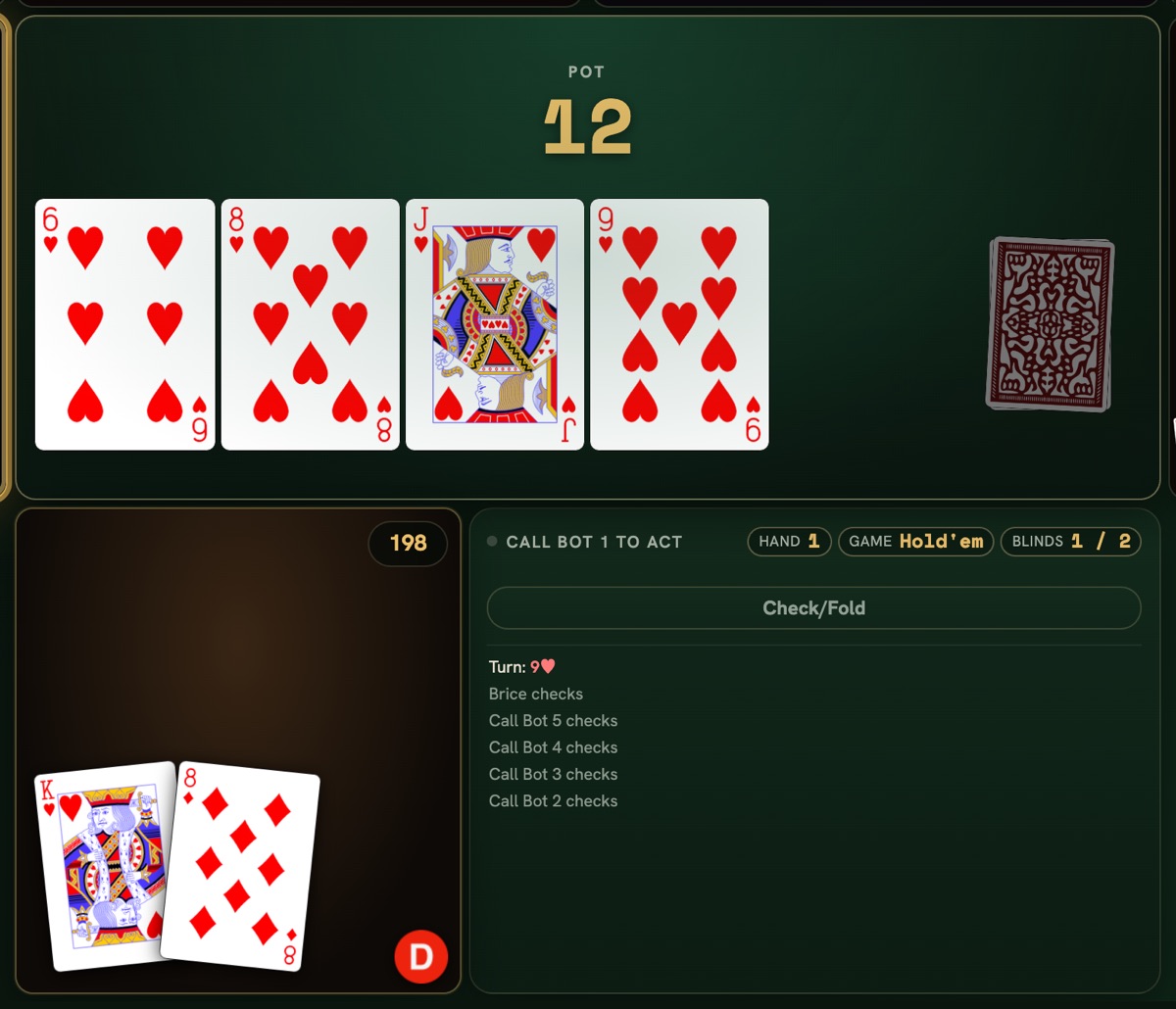
For example: the river puts a fourth heart on the board. Your opponent moves all-in, you call holding the king of hearts for a flush, and they proudly turn over three of a kind. Instead of showing your flush, you sigh, shake your head, tell them "nice hand"... and then flip it over.
It might feel funny for a second. For everyone else, it's the most annoying thing you can do at a poker table, because it builds up a player's hopes just to take them away. If you know you've won, show your cards right away.
Win quietly
Rake in the chips, stack them, move on. No explaining to the loser why their play was wrong, no celebrating every pot. A big hand deserves a reaction; gloating over a small one doesn't.
Lose without tilting
Bad beats happen to everyone. It's fine to groan; it isn't fine to throw cards, blame the dealer, or start playing every hand to win it back. If you're frustrated, sit out a hand or two and get a drink.
Don't blame the dealer
At home, the dealer is just one of your friends, taking their turn. The cards aren't personal.
Which etiquette rules apply to the host?
The host sets the tone for the whole night, so a few extra responsibilities:
- Keep seating fair. Draw for seats at the start. If someone wants to switch seats mid-game, allow it between hands only, and only if the other player agrees.
- End on time. Announce the end time in the invite, and stick to it. "Last orbit" means everyone gets one more round of the dealer button, then the game is done. Nobody should have to leave early to protect a win.
- Make rule calls quickly and fairly. When something comes up, make a call and move on. Consistency matters more than getting it perfect. House Rules Every Home Game Should Agree On covers the calls you'll need most.
- Handle the angry rebuy. Everyone knows the friend who rebuys straight after a bad beat, still annoyed, determined to win it back. Have a rebuy policy decided in advance (a cutoff time, or a limit per night), so it's the rule saying no, not you. If someone is clearly upset, suggest a break before the rebuy, not after.
- Look after new players. Explain the game before they sit down (send them Texas Hold'em Rules in Plain English), keep the hand rankings handy, and make sure nobody mocks a beginner's mistake.
For more on planning the night, see How to Host a Poker Night Your Friends Actually Come Back To.
What's good etiquette for online poker over video?
Playing with friends on video is still a home game, with a few extra habits:
- Keep your camera on. Seeing faces is the point. If you need to step away briefly, say so.
- Mute when there's background noise. Barking dogs, a TV, or a loud kitchen drown out the table talk. Unmute to chat.
- Don't disappear mid-hand. If you need a few minutes, sit out properly rather than letting the table wait on you. In Table Talk, the Step Away button sits you out, and you come back in at the big blind.
- Act promptly. Online, waiting on one person is even more noticeable than at a table. If your phone buzzes when it's your turn, pay attention to it.
- Watch the side chat. A running commentary on a hand that's still live is still discussing a live hand.
- No second screens on the action. Looking at another device to work out what to do, or chatting about the hand with someone off camera, is exactly what it sounds like.
The trash talk, the groans and the "why did you call that?" are what make it feel like poker night rather than a card game on a screen. If you'd like to see how a game feels before inviting people, deal a few hands against bots at the try-it table.
A short checklist for every player
- Act in turn, and be ready when it's your turn.
- Don't talk about a hand you're not in until it's over.
- Show your winning hand right away.
- Keep your cards and chips where they should be.
- Win quietly, lose gracefully.
- Let the host make the calls, and accept them.
Poker etiquette FAQ
What is slow-rolling in poker? Taking your time to show a hand you know has won, so your opponent thinks they've won first. It's considered one of the rudest things you can do at a poker table.
Is it rude to talk during a poker hand? General chat between hands is fine and is half the fun of a home game. What's rude is talking about a hand while it's still being played, especially if you've folded.
What does acting out of turn mean? Folding, betting or announcing your action before the players ahead of you have acted. It gives them information they shouldn't have.
Can you show your cards after folding? Wait until the hand is over. Showing your cards during a hand gives information to the players still in it.
What should a host do about a player who keeps tilting? Set a rebuy policy before the game starts so the rule decides, not you. If someone is upset, suggest a short break before they rebuy.